Social Evils &
Rehabilitation
Naming a social evil is easy and costs nothing. Rehabilitation is slow, expensive, unphotogenic, and the only part that actually changes a life.
Two failures to avoid
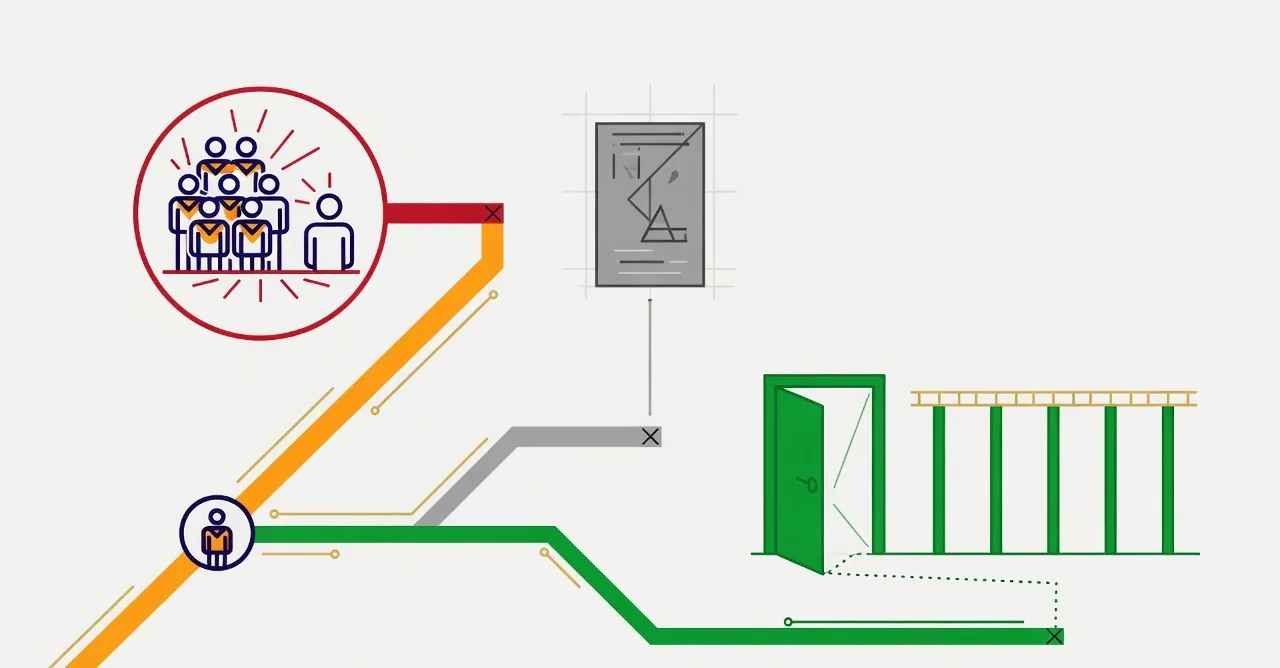
Almost every community campaign against a social evil fails in one of two ways, and they are opposite failures.
The first failure: moral policing
A committee decides who is behaving badly and appoints itself to correct them. This produces surveillance, humiliation, caste enforcement dressed as reform, and occasionally violence. It drives the actual problem underground, where it gets worse, and it ensures nobody in trouble ever asks for help.
The second failure: an awareness poster
A slogan, a rally, a signed pledge, a photograph. Nothing is offered to the person who wants to leave the situation — no treatment place, no alternative income, no legal aid, no room to sleep tonight. The evil is condemned and continues.
What sits between them is boring and effective: make leaving possible. A route out that is real, reachable, voluntary, confidential, and attached to a livelihood.
The problems, and what a unit can honestly do about each
Addiction — alcohol, tobacco, and drugs
The most common destroyer of household finances in India, and the one most often handled by shame. What a unit can do: confidential referral to de-addiction services, family support groups, counselling for spouses and children, debt counselling alongside treatment, and employment held open through recovery. What it must never do: name people, pressure people, or make any service conditional on sobriety.
Debt, moneylending and bondage
Bonded labour is illegal and persistent. It begins with an emergency loan at an impossible rate. What a unit can do: financial literacy before the crisis, emergency micro-assistance from the fund so the moneylender is not the only option, legal aid, connection to formal credit, and rehabilitation with livelihood restoration for released bonded labourers. Identification and prosecution are government functions — the unit supports the person, not the enforcement.
Dowry
Illegal since 1961 and near-universal in practice. The honest position is that a community body cannot police this and should not try. What it can do: support women facing harassment with legal aid and safe referral; make the economic arguments visible; work with families before a marriage rather than after; and never, under any circumstances, mediate a dowry-related violence case within the community.
Child marriage and children out of school
Strongly linked to poverty, distance to school, and girls’ safety on the route. What a unit can do: know which children are not in school and why; fix the reachable causes — transport, a toilet, a safe route, fees, a lost document; offer bridge education; support the family economically so the calculation changes. Protection cases go to the statutory child protection system, immediately.
Untouchability and caste discrimination
Constitutionally abolished, socially present, and most visible in who is allowed to draw water, enter which building, cook for whom, and marry whom. The Setu model’s structural answer is that no service is ever conditional on caste and no caste is ever recorded, and that the Citizens’ Jury is drawn by lot precisely so the same families cannot decide everything. Discrimination in a unit’s own services is a failure trigger that can put it under administration.
Manual scavenging
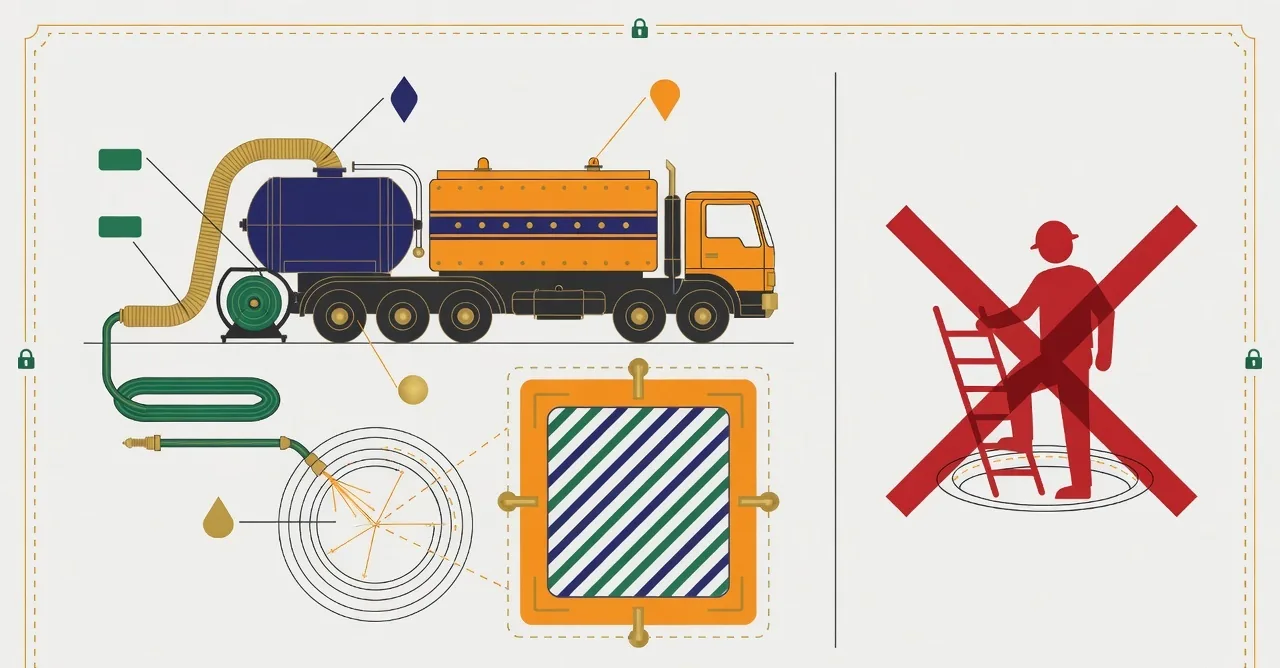
Prohibited by law, still killing people in septic tanks and sewers every year, and almost entirely done by one set of communities. What a unit can do: refuse to procure any service that involves manual entry, fund and demand mechanised equipment, ensure protective equipment where mechanisation is not yet possible, and put rehabilitation and alternative employment ahead of everything else. This is one place where a community’s purchasing decisions directly determine whether someone dies.
Trafficking, bonded migration and exploitative recruitment
Units are both source and destination. What a unit can do: know who has left and with whom; maintain a register of legitimate recruiters; provide pre-departure information; support families to verify that a person arrived safely; and offer reintegration — documents, health, livelihood, schooling — on return. Investigation is police work, always.
Superstition, coercive ritual and quackery
Where a practice causes physical harm, financial extraction or the denial of medical treatment — particularly to women, children and people with mental illness — it is a matter of law and health, not of belief. The distinction this model holds to: the state and the community act on harm, never on belief. Private faith and voluntary practice are nobody’s business.
Domestic violence
Listed here only to repeat the absolute rule that governs it everywhere on this site: it never goes to community mediation, no elder or committee may ask a survivor to reconcile or explain, and referral is to survivor-centred professional and legal services. The community’s role is to make sure the survivor knows the route exists and can reach it without anyone finding out.
The part everybody skips
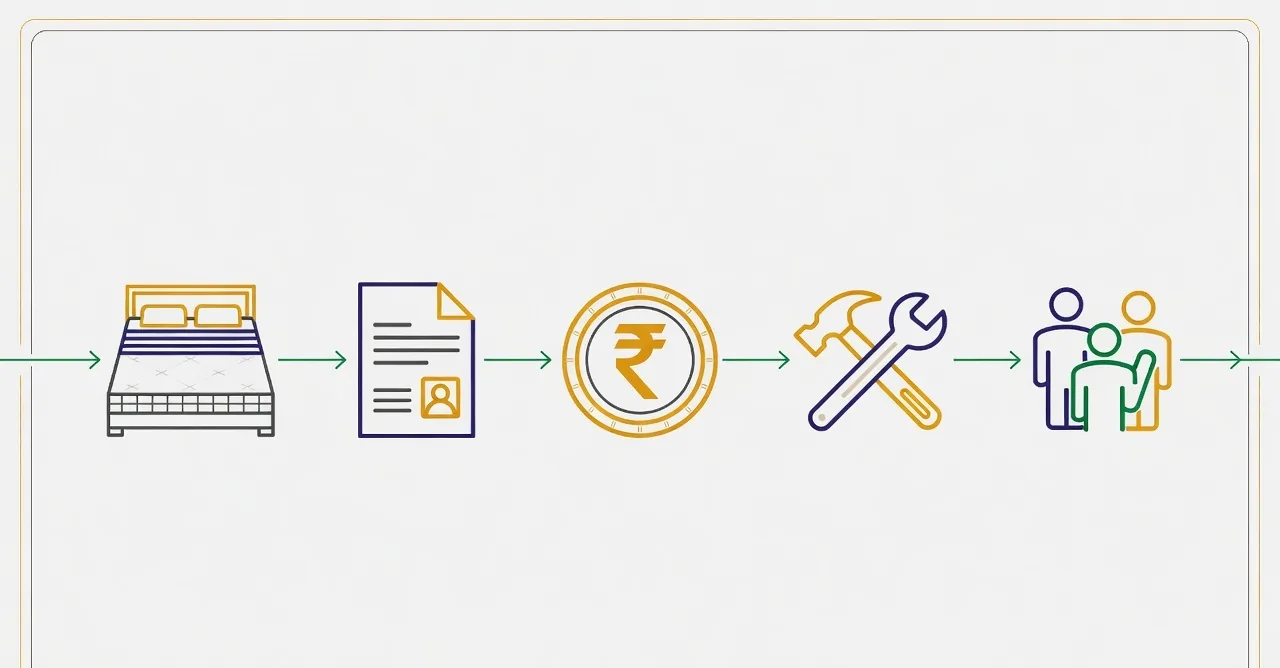
A person leaving addiction, bondage, trafficking, prison, a violent home or a prohibited occupation needs roughly the same five things. The model already contains all five — which is the argument for building them together rather than as separate schemes.
Somewhere to be tonight
Emergency shelter, food and sanitation, guaranteed by the national service floor regardless of what the unit can afford.
Documents
Identity, ration, bank account, school records. Without these a person cannot legally exist, and restoring them is unglamorous administrative work the support centre can actually do.
Income this month
Community employment or a Sahayata task, immediately, because recovery does not survive destitution.
A skill and a next job
The Learning Park and the trade certification route, so the first job is not the last one.
People
Peer groups, a named contact, and a community that does not treat the person as their history. This is the one that determines whether the other four hold.
And confidentiality throughout
Nothing about a person’s past is recorded in the unit’s system, visible to volunteers, or discussed. Rehabilitation that costs someone their privacy is not rehabilitation.
- No moral policing. No inspection of private life. No committee of concerned citizens.
- No register of who is addicted, indebted, bereaved, disabled or in recovery.
- No public naming, shaming, pledging or parading of anyone.
- No service, benefit or opportunity conditional on participating in any reform programme.
- No community handling of violence, abuse or coercion — ever.
- Volunteers are not counsellors, doctors, investigators or police. They accompany and refer.