Community Safety
A community can make a place much safer without acquiring a single power of enforcement. Confusing the two is how neighbourhood safety turns into something worse than the problem.
This page is an outline. The full concept is being written and will replace what follows. What is here now is the shape of the argument, not its final form — published early on purpose, so it can be argued with while it is still easy to change.
Safety is not policing

The permanent red line stands: no powers of enforcement, detention, inspection, patrol or investigation. Every route from “community with modest safety powers” to serious abuse is short, and India has walked it often enough.
What remains after removing all of that is still substantial — and, by the evidence, more effective at reducing everyday harm than informal enforcement ever is.
What a unit can do
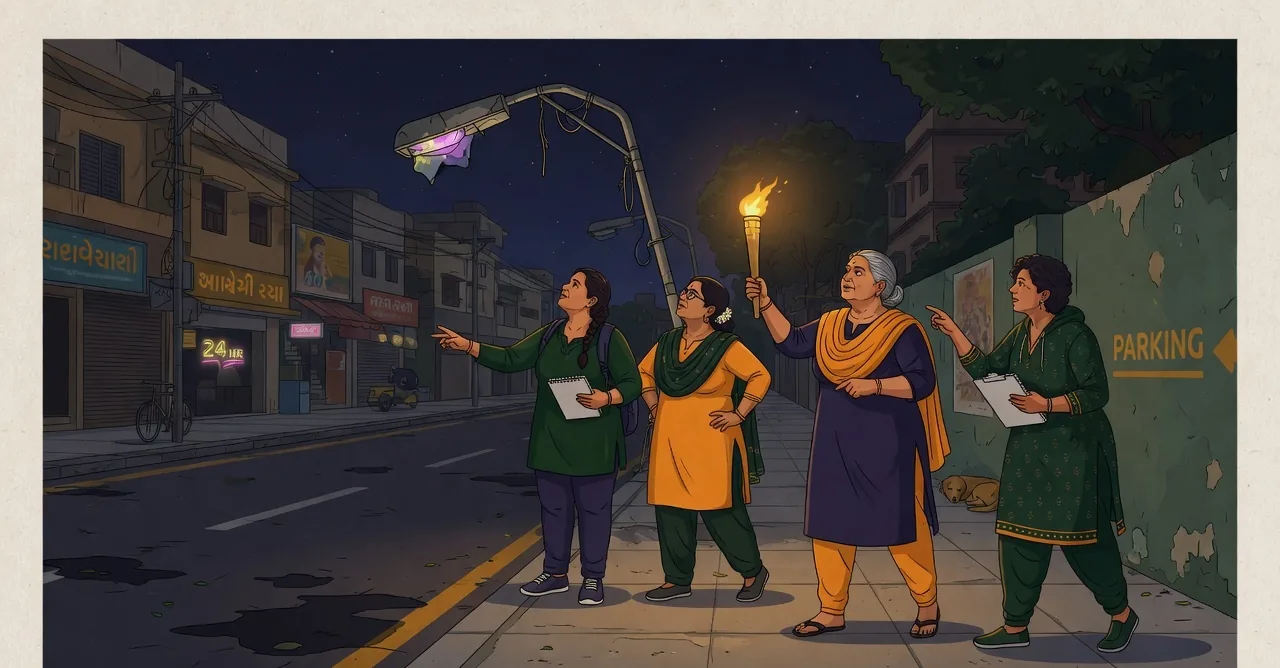
- Fix the physical causes. Lighting, cleared sightlines, repaired footpaths, open shopfronts on a dark stretch, a usable bus stop. Most of the fear in a neighbourhood has infrastructure causes the fund can pay for.
- Safety audits, walked at night by the women, elderly residents and disabled residents who actually avoid those routes — producing a repair list, not a report.
- Safe routes to schools, clinics, transport and workplaces.
- Witness and victim support: accompanying someone to a police station, explaining a process, arranging legal aid, following up so a complaint is not quietly abandoned.
- Referral to shelters, counselling, legal aid and specialist services.
- Observation and reporting only — noticing and telling the competent authority, exactly as any citizen may.
- Road safety: speed calming, crossings, school-gate arrangements — a far larger cause of death than crime in most units.
- Publishing the authority’s response times, so when referral produces nothing, the failure is visible rather than filled by a mob.
What it will never do
- Patrol, stop, question, search, detain or confront anyone
- Investigate an allegation
- Run surveillance, maintain watch-lists, or operate facial recognition
- Keep records of suspicion, complaints about individuals, or anyone’s movements
- Police morality, dress, diet, relationships, or who visits whom
- Mediate violence, abuse or coercion of any kind
- Treat outsiders, migrants or any community as a safety category
The last four are where community safety schemes around the world have gone wrong, and they are the reason this page exists before the programme does.